By Joe Dunn
NASCAR is looking ahead to 2011 with some not so subtle changes for the NASCAR Nationwide Series. The biggest change of course is the move to the new car. That project has been in the works for a couple of years and the first official appearance was earlier this month at Daytona.
I spoke to several NNS team owners over the weekend at ORP and the general consensus is that the smaller teams see this new car as a financial burden that most cannot afford. It’s no secret around the garage that NASCAR had contacted the larger Cup based organizations, among them, Roush Fenway Racing, Joe Gibbs Racing and Richard Childress Racing to each bring extra cars to Daytona for the first race. The fear of not having enough cars to fill the field for a highly anticipated and publicized race was real.
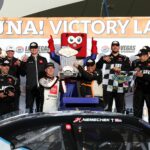
NASCAR truly was surprised when the entries came in and a full field was assured. With the addition of Dale Earnhardt Jr. in a special Richard Childress car, and Carl Long in a one race deal with a new owner, one car even went home missing the race. But the real story was the fact that most of the teams there had no backup cars. Joe Nemechek was one of them. “ I had one car there, and no backup. That was not a new car, but rather an old Cup car that we rebuilt to make into a COT car.” Nemechek told me at ORP, “ I don’t know yet what I’m going to do for next year, if we can afford to build some of these new cars. The money is just too tight now.”
Jennifer Jo Cobb, owner /driver of the #10 team in the NASCAR Camping World Truck Series has aspirations of moving up to the NNS in the future. She was forced to partner up with Baker Curb Racing to build a single car which they jointly plan to run in the four races scheduled for this year. “That car was destroyed at the beginning of the race at Daytona, and we have no backup car. We are rebuilding it for the Michigan race, but since I will be driving at Darlington that week we’ll have another driver in the car” Cobb said, “ We started building the new car early, but it became obvious that this was not a cheap project. Baker Curb lost their sponsor on the 27 car earlier in the season and they were struggling to fund a new car, so we partnered up on this deal for the four races.”
It’s not just the new car that is hampering some of the smaller limited budget teams. “We entered a car in the Nationwide race at Gateway and we didn’t make the field,” said Cobb, “ The lack of testing is really hurting us, but with the way the testing rules are we just can’t prepare a new car for a track that I have not driven before. That was obvious at Gateway.”
The problems with this series is funding, With the economy not rebounding as many had hoped it would, the majority of the NNS teams are really in trouble. The sponsors have gone away and attracting new ones is a near impossible task. “ A few years ago, you could land a $200,000.00 sponsor relatively easy, heck, sometimes you were turning them away.” Nemechek said, “ Now, you are breaking your neck and bending over backwards to land a $20,000.00 deal. You can’t build new cars and keep racing like that.” In addition to the loss of sponsorship money, the race purses were all cut this year too.
At the beginning of the season, NASCAR announced that in conjunction with lowering ticket and concession prices, the track would be cutting the purse money by 10%. Several team owners have privately confirmed that the 10% is an exaggeration. Some say that the cuts in some cases were more in the neighborhood 20-30%. One team official compared the present purse structure to a welfare system. “We don’t usually start and park, but we will be for a while.” I was told, “The difference in purse money between finishing 40th after 10-15 laps and finishing 28th after 100 or more laps, won’t pay the tire bill. And if the car gets tore up, your in even more trouble money wise.”
These situations point to real genuine problems in the series, and those problems are not going to be remedied by mandating a new car that many of the teams simply can’t afford. NASCAR did step in and approached the ARCA series, the result is a change in ARCA rules for 2011 which allow their teams to run the shorter wheelbase cars. This will present a market for the current cars that will become obsolete after this season. That will help some of the bigger teams as they recoup some money from the old cars, but just as it did when the Cup teams moved to a new car, the supply will be a lot bigger than the demand. At that time, the old cars sold for pennies on the dollar and only the front running team’s cars were in demand.
I spoke with Cindy Shepherd Caldwell, of Morgan Shepherd Racing, about this a few weeks ago at Kentucky Motor Speedway, and she was pretty blunt about it. “There will only be so many buyers, so most of them will be looking at the Gibbs, Roush, Penske, and Childress cars. Teams like us will be lucky to give these cars away.” Then of course there is the case of the Super Speedway cars, those cars built exclusively for Daytona and Talladega. ARCA’s rule change did not include those tracks, so those cars, even with the top teams, are without a market. Some of the teams were looking to strip down and unload those cars after Talladega, but many are now sitting behind the race shops collecting dust. Many of the teams are hopeful that ARCA will change the rule on those two tracks, they have promised to make a final decision sometime in September.
Tuesday, July 27, 2010
Hornaday and Bush repeat at ORP
By Roger Faulkner
It was another hot weekend at O’Reilly Raceway Park, in Clermont, IN. as the track came alive for three solid days of great racing. This was my second year at the great old track to cover Nascar for On Pit Road, but this year we got there early, arriving Thursday afternoon. That early arrival gave us time to catch the USAC action as the Midgets and the Silver Crown Sprint cars were in action.
The Midgets ran their 30 lap feature first and it was Kody Swanson of Kingsburg, CA. that led the race flag to flag. Among the field that night was Jason Leffler. Ryan Newman attempted the race in a Tony Stewart car, but they could never get the car to handle and pulled in after only a couple of laps in the heat race. In the Silver Crown race, both Leffler and Newman started the 100 lap race, with Newman starting second and leading the first lap. But both Newman and Leffler would retire early as the race was dominated by Brad Sweet, Kody Swanson and Bobby East. On lap 64 Tracy Hinds took the lead and never looked back as he collected the win.
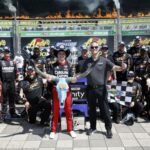
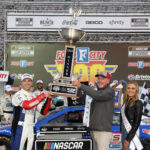
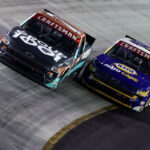
In the Nascar Camping World Truck Series AAA Insurance 200, it was an three early battle between, Pole sitter Timothy Peters, Kyle Bush and Ron Hornaday. But as the laps wore down, it was Hornaday taking the lead and holding off the challengers. Peters would eventually fade back in the field and the battle was all Hornaday and Bush, but the crafty old veteran hung out there to repeat as the winner again this year at ORP. Bush had to settle for second, followed by Matt Crafton, Johnny Sauter and James Buescher. Rounding out the top 10 was Rookie Austin Dillon, sixth, followed by series point leader Todd Bodine, Brad Sweet, David Starr and Timothy Peters in 10th.
A jubilant Hornaday celebrated hard in Victory Lane as he is on a rebound from a poor start to the season. He made reference to that bad start when he declared, “this win is for Ray Dunlap.” the popular reporter for SPEED TV, “ Ray said that I was out of the running and could hang it up, early in the season. Ray, I’m still here.”
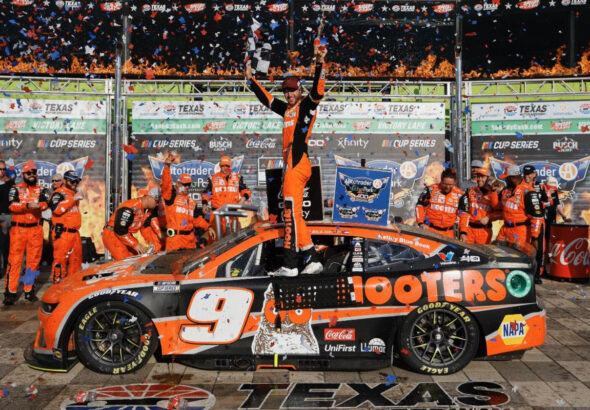
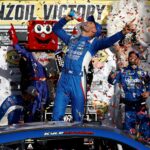
On Saturday night, the Nascar Nationwide Series took to the same track at ORP, with Trevor Bayne starting on the pole for the second year. Nascar had been watching the weather all day and there were threats of rain, so the start of the race was moved up 15 minutes. Bayne led the early laps, but as the race settled in it was Kyle Bush and Trevor Bayne swapping the lead several times. Carl Edwards charged to the front, but he never had enough to get past Bush. With an eye on the radar Nascar made quick work of the 6 cautions in this race and finished the race in less than 2 hours. It looked like the race was going to finish early and right on the 200 lap mark, but a spin in turn 4 by Joe Nemechek brought out the 6th caution on lap 196. That set up a green-white-checker finish with Edwards pushing hard to catch Bush. But Kyle would have no part of that so on lap 201 he collected his third win in a row at ORP in the Nationwide car. Edwards crossed the line second, followed by Almirola, Bayne and Sorenson. Series point leader Brad Keselowski finished 8th.
It was another hot weekend at O’Reilly Raceway Park, in Clermont, IN. as the track came alive for three solid days of great racing. This was my second year at the great old track to cover Nascar for On Pit Road, but this year we got there early, arriving Thursday afternoon. That early arrival gave us time to catch the USAC action as the Midgets and the Silver Crown Sprint cars were in action.
The Midgets ran their 30 lap feature first and it was Kody Swanson of Kingsburg, CA. that led the race flag to flag. Among the field that night was Jason Leffler. Ryan Newman attempted the race in a Tony Stewart car, but they could never get the car to handle and pulled in after only a couple of laps in the heat race. In the Silver Crown race, both Leffler and Newman started the 100 lap race, with Newman starting second and leading the first lap. But both Newman and Leffler would retire early as the race was dominated by Brad Sweet, Kody Swanson and Bobby East. On lap 64 Tracy Hinds took the lead and never looked back as he collected the win.
In the Nascar Camping World Truck Series AAA Insurance 200, it was an three early battle between, Pole sitter Timothy Peters, Kyle Bush and Ron Hornaday. But as the laps wore down, it was Hornaday taking the lead and holding off the challengers. Peters would eventually fade back in the field and the battle was all Hornaday and Bush, but the crafty old veteran hung out there to repeat as the winner again this year at ORP. Bush had to settle for second, followed by Matt Crafton, Johnny Sauter and James Buescher. Rounding out the top 10 was Rookie Austin Dillon, sixth, followed by series point leader Todd Bodine, Brad Sweet, David Starr and Timothy Peters in 10th.
A jubilant Hornaday celebrated hard in Victory Lane as he is on a rebound from a poor start to the season. He made reference to that bad start when he declared, “this win is for Ray Dunlap.” the popular reporter for SPEED TV, “ Ray said that I was out of the running and could hang it up, early in the season. Ray, I’m still here.”
On Saturday night, the Nascar Nationwide Series took to the same track at ORP, with Trevor Bayne starting on the pole for the second year. Nascar had been watching the weather all day and there were threats of rain, so the start of the race was moved up 15 minutes. Bayne led the early laps, but as the race settled in it was Kyle Bush and Trevor Bayne swapping the lead several times. Carl Edwards charged to the front, but he never had enough to get past Bush. With an eye on the radar Nascar made quick work of the 6 cautions in this race and finished the race in less than 2 hours. It looked like the race was going to finish early and right on the 200 lap mark, but a spin in turn 4 by Joe Nemechek brought out the 6th caution on lap 196. That set up a green-white-checker finish with Edwards pushing hard to catch Bush. But Kyle would have no part of that so on lap 201 he collected his third win in a row at ORP in the Nationwide car. Edwards crossed the line second, followed by Almirola, Bayne and Sorenson. Series point leader Brad Keselowski finished 8th.
Friday, July 9, 2010
Danica get’s a top 25, along with Morgan Shepherd
By Joe Dunn
In her last race in the NASCAR Nationwide Series at New Hampshire Motor Speedway Danica Patrick got together with Morgan Shepherd which sent her into the wall. It was a pure racing incident where Shepherd got loose and slid up into Patrick’s car. The immediate reaction from Danica has been well documented and of course included a lot of comments that illustrated her lack of knowledge about NASCAR and the way these cars react to each other on the track.
In the aftermath she finished 30th, 5 laps down, while Shepherd finished 8 places ahead of her 3 laps down. Skipping Daytona, Danica returned at Chicagoland for the Dollar General 300. This week, she didn’t have anything to blame on anybody else. Her run, which mainly consisted of being 2 or 3 laps down to the leaders was the typical run of a rookie, except of course for the TV guys still drooling over her and giving her way too much attention.
Danica again began the race weekend with one of the best cars, for one of the best teams, that was specially prepared for her and this race. Danica’s performance was pretty much uneventful this week. She managed to stay out of the way of the leaders, and it wasn’t until past the halfway mark before she actually challenged anyone on the track. She managed to stay out of trouble and finished a career best 24th, 2 laps down.
For Morgan Shepherd the Dollar General 300 was a new type of learning experience for the 68 year young veteran. When the rumors went out early in the week that Richard Childress Racing was not going to run the unsponsored 21 car at Chicago, there was discussion about Shepherd using the 21 number on his car for a guaranteed start. Those discussions continued but by the time they were at the track Thursday, NASCAR had ruled that an RCR car must be used to complete the deal. The frenzy that followed resulted in an RCR 21 car arriving at the track late Thursday. By the time the car made it through inspection, Shepherd was able to run 17 laps in the final practice with a car that was not prepared for this race.
This was a rather uneventful race for Morgan Shepherd also, except that he didn’t have to worry about qualifying. His driving style was pretty similar to what it has been for the past years. Treating the car like everything was coming out of his own pocket, (which for the most part IS the case) he carefully ran a conservative race, taking care not to tear up the car. Shepherd is an old school racer who understand the phrase, ‘bring it home in one piece.’ In the end, Shepherd finished 25th, 3 laps down, one spot behind Danica.
There are still a lot of unconfirmed rumors running about Shepherds future with the 21 team. But so far, now comments yet from anyone at RCR or from Morgan Shepherd. Speculation is that Childress may allow Shepherd to use the 21 car in the remainder of the unsponsored races for the season.
All of this of course brings us back to the month’s old question, where is John Wes Townley? Still, nobody at RCR will comment.
In her last race in the NASCAR Nationwide Series at New Hampshire Motor Speedway Danica Patrick got together with Morgan Shepherd which sent her into the wall. It was a pure racing incident where Shepherd got loose and slid up into Patrick’s car. The immediate reaction from Danica has been well documented and of course included a lot of comments that illustrated her lack of knowledge about NASCAR and the way these cars react to each other on the track.
In the aftermath she finished 30th, 5 laps down, while Shepherd finished 8 places ahead of her 3 laps down. Skipping Daytona, Danica returned at Chicagoland for the Dollar General 300. This week, she didn’t have anything to blame on anybody else. Her run, which mainly consisted of being 2 or 3 laps down to the leaders was the typical run of a rookie, except of course for the TV guys still drooling over her and giving her way too much attention.
Danica again began the race weekend with one of the best cars, for one of the best teams, that was specially prepared for her and this race. Danica’s performance was pretty much uneventful this week. She managed to stay out of the way of the leaders, and it wasn’t until past the halfway mark before she actually challenged anyone on the track. She managed to stay out of trouble and finished a career best 24th, 2 laps down.
For Morgan Shepherd the Dollar General 300 was a new type of learning experience for the 68 year young veteran. When the rumors went out early in the week that Richard Childress Racing was not going to run the unsponsored 21 car at Chicago, there was discussion about Shepherd using the 21 number on his car for a guaranteed start. Those discussions continued but by the time they were at the track Thursday, NASCAR had ruled that an RCR car must be used to complete the deal. The frenzy that followed resulted in an RCR 21 car arriving at the track late Thursday. By the time the car made it through inspection, Shepherd was able to run 17 laps in the final practice with a car that was not prepared for this race.
This was a rather uneventful race for Morgan Shepherd also, except that he didn’t have to worry about qualifying. His driving style was pretty similar to what it has been for the past years. Treating the car like everything was coming out of his own pocket, (which for the most part IS the case) he carefully ran a conservative race, taking care not to tear up the car. Shepherd is an old school racer who understand the phrase, ‘bring it home in one piece.’ In the end, Shepherd finished 25th, 3 laps down, one spot behind Danica.
There are still a lot of unconfirmed rumors running about Shepherds future with the 21 team. But so far, now comments yet from anyone at RCR or from Morgan Shepherd. Speculation is that Childress may allow Shepherd to use the 21 car in the remainder of the unsponsored races for the season.
All of this of course brings us back to the month’s old question, where is John Wes Townley? Still, nobody at RCR will comment.
Sunday, June 27, 2010
One driver’s memories of the 1959 NASCAR Firecracker 250
(L to R) Roger Flaherty, unknown, Leif Johansson, Frank Wasko, Gary Raymond, John Paschal(driver), Tommy Paschal -photo courtesy Roger Flaherty
By Joe Dunn
It was a 51 year reunion of sorts and I’m not sure who enjoyed it the most. I felt like I had fallen back in history, to a time that I have had the pleasure to study over the years. The time was 1959, racing news was not available like today, so most of the information was weeks or months late, gathered from the ‘racing papers’ sold at the local race tracks. Record keeping was sporadic at best and there was no central records office for auto racing.
Daytona International Speedway had opened in February of 1959 with it’s inaugural race, the Daytona 500, but the new track already had other racing venues scheduled. The 4th of July was to be a much anticipated USAC Champion (Indy car) race. Promoters envisioned this to become the southern version of the Indy 500. But a 100 lap USAC race on April 4th, resulted in the death of rookie driver George Amick. It was a mutual decision by UASC and DIS officials that the track was too fast and the surface too rough to ever run the open wheel cars there again.
This led Bill France Sr. and the folks of NASCAR scrambling to fill the date, and quickly a NASCAR Grand National event was added to the schedule. Not to take away from the ‘glory’ of the ‘500’, this would be a shorter race consisting of 100 laps for a distance of 250 miles. Being held on Independence Day, the ‘Firecracker 250’ seemed to be a fitting name for the event. With less than 3 months to get a field of cars in place, legendary promoter and NASCAR Vice-President Ed Otto reached out to his northern roots to get cars and drivers to fill the field.
It was late June of that year that John Paschal of Hibernia, NJ headed for Daytona Beach Florida in his quest to join the ranks of NASCAR at the new Speedway. John packed up his 1957 Ford for the trip and hooked his Sleepy Hollow Garage, 1958 Ford race car up with a tow bar for the trip. He arrived in Daytona early in the week and was the first car to arrive at the Speedway on Tuesday, for the Saturday race. “ I had raced for a while up north, but I knew I had a lot to learn about NASCAR and wanted to be there early in hopes of getting some help and advice from the other drivers.” John recalled.
Paschal’s mother was already living not far from Daytona, so younger brother Tom was quick to join in to help. Being at the track early, they both met up soon with Bill France Sr. who was staying in a trailer at the track. “I got to talk to Mr. France and he was a really great guy”, said Paschal, “I explained to him that Tom was my ‘crew’ and even though he was too young (15) to get a NASCAR license, he took us over to the office and got Tom a license.” John Paschal’s No. 60 team was assigned a garage area and as other teams began arriving, Lee Petty was assigned the garage next to John, with Ralph Moody also being nearby. Over the days leading to the race John learned of a lot of ‘little’ things he could do to improve the car for racing at Daytona.
“ I was out running laps, I had it to the floor and all of a sudden two or three cars would go by, all bumper to bumper.” said Paschal, “When they got along side me, I saw the RPM’s on the tach go up and my speed increased. As soon as they got by, everything went back to where it was and they were long gone. I had just learned about the draft!” Discussing the cars then and comparing to the cars of today, John told me that they had all of the factory glass still in the car and he had his windows open to try to keep himself cool. He noticed that a lot of cars were running with the windows closed. “I was running out there, and I rolled up the window to see what it would do, and all of a sudden I was going 10 MPH faster. That was something you would never experience at a short track.” he told me.
Brother Tom recalled that they were having trouble getting up the speed for a qualifying run, “I had the intake manifold off and Lee Petty came by and looked at the camshaft. He told me to go over to the Holman-Moody trailer and get an offset camshaft key. I went over and got that key and we picked up almost 10 MPH. These guys knew all the tricks.”
John was told about the bump in turn four, where if you were running high and hit it, you would fly up into the wall. “ I knew about that bump, and when I qualified, sure enough, I was high and it threw me into the wall and messed up my run.” John explained. He was disappointed in the fact that he qualified and started 9th in his first race there.
Come race day, The No. 60 Ford managed to stay up front, “I was running 6th for much of the race. Mom was home, but she told me later that she listened to the race on the radio and how excited she was when they mentioned my name several times.” John still has fond memories of that and had tried, with no success to find an audio copy of that radio broadcast. But his top 10 run would be derailed when his engine suddenly began losing power. His oil pressure was dropping, the car was smoking real bad, and he feared it would not make it all the way to pit road before his engine exploded, but somehow he managed to get there. His engine was nearly out of oil and a check under the car revealed the problem. A broken oil filter had allowed the engine oil to run out. Both Tom and John scattered up and down pit road and the garage area in an attempt to locate an oil filter. But they were running out of luck as the field raced past and not a single filter could be found.
It was a sign of sheer racer desperation and determination as they both started peering over the infield parking lots. John spotted a new 1959 Ford in a lot and they both climbed the fence to get at the car. John crawled under the car and discovered the same engine with the same filter. Not bringing any tools in the rush, John struggled to remove the oil filter by hand. He managed to get it off and instructed Tom to leave a note on the car telling the owner what they did.
Over the fence and back to the car, they got the ‘borrowed’ oil filter installed, filled the engine with oil and the No. 60 Ford was back in the race 33 laps down. The Paschal team finished the race, officially in 30th place, but John likes to think he was 16th. You see, NASCAR had two Grand National divisions back then, Hard Tops and Convertible, and this race had both cars, so John Paschal’s car was the 16th place Hard Top to finish the race. After the race was over, and John had collected his $100 winnings, he also had a bill for his tires, parts and fuel for the race, which far exceeded his winnings. He mentioned to Bill France Sr. that he was going to have to find a buyer for his 1957 Ford tow car, to pay the bills. France smiled and told him that his secretary was in need of a car and he bought the car on the spot. With his bills paid and a few extra dollars to spare, he found another racer to ‘hitch a ride with for himself and his racecar to get back home to New Jersey. “Oh, and about that oil filter“, John recalled, “This short guy comes up to me after the race, he was a true race fan and he understood and seemed to appreciate that he had ‘helped’ one of the race teams. He was also very thankful for the note giving him the heads up.”
Although the records available show this as John’s only NASCAR race, he talked about other races he ran including the 1958 race at the Polo Grounds in New York city, the 1960 Road Course race at Montgomery Air Base in NY, Heidelberg Raceway in New Jersey and a few others during that era.
Back to present day and the ‘Reunion’, it took place on Wednesday June 23 at the NASCAR Hall of Fame in Charlotte, NC. When it was announced a couple of years ago that the Hall of Fame would be offering a ‘Commemorative Brick Program’, Tom Paschal wanted to honor his brother with one. He contacted their sister, Johanna Paschal Cavalli and she began the process to order the brick and to get the information needed to get just the ‘Right’ inscription on the brick.

In January of 2009, she contacted this writer asking for help as she was having some problems gathering information. I did a bit of research on my own, sent it along to her and wished her luck. She thanked me for the help and I didn’t hear back from her until Monday June 21, 2010. It was at that time she told me about the ‘Brick’ and that the family was all gathering Wednesday at the NASCAR Hall of Fame to see the brick. My plans suddenly changed for that week and I got a chance to relive that era from my childhood with the Paschal family.
Meeting in Charlotte would be John Paschal, now of Mine Hill, NJ, Tom Paschal of Sacramento, CA., sister Johanna Cavalli of Palm Coast, FL and John’s daughter Sonja Kuntzelman and family of Hertford, NC and his son J. Tom Paschal of Greer,SC.
Tom and John at the NASCAR Hall of Fame with Lee Petty's car from the 1959 Firecracker 250.
Hats off to the staff at the NASCAR Hall of Fame for making this all possible and a special Thank You to Natividad Lewis of the Hall of Fame for her help in making this a special day for the family.
By Joe Dunn
It was a 51 year reunion of sorts and I’m not sure who enjoyed it the most. I felt like I had fallen back in history, to a time that I have had the pleasure to study over the years. The time was 1959, racing news was not available like today, so most of the information was weeks or months late, gathered from the ‘racing papers’ sold at the local race tracks. Record keeping was sporadic at best and there was no central records office for auto racing.
Daytona International Speedway had opened in February of 1959 with it’s inaugural race, the Daytona 500, but the new track already had other racing venues scheduled. The 4th of July was to be a much anticipated USAC Champion (Indy car) race. Promoters envisioned this to become the southern version of the Indy 500. But a 100 lap USAC race on April 4th, resulted in the death of rookie driver George Amick. It was a mutual decision by UASC and DIS officials that the track was too fast and the surface too rough to ever run the open wheel cars there again.
This led Bill France Sr. and the folks of NASCAR scrambling to fill the date, and quickly a NASCAR Grand National event was added to the schedule. Not to take away from the ‘glory’ of the ‘500’, this would be a shorter race consisting of 100 laps for a distance of 250 miles. Being held on Independence Day, the ‘Firecracker 250’ seemed to be a fitting name for the event. With less than 3 months to get a field of cars in place, legendary promoter and NASCAR Vice-President Ed Otto reached out to his northern roots to get cars and drivers to fill the field.
It was late June of that year that John Paschal of Hibernia, NJ headed for Daytona Beach Florida in his quest to join the ranks of NASCAR at the new Speedway. John packed up his 1957 Ford for the trip and hooked his Sleepy Hollow Garage, 1958 Ford race car up with a tow bar for the trip. He arrived in Daytona early in the week and was the first car to arrive at the Speedway on Tuesday, for the Saturday race. “ I had raced for a while up north, but I knew I had a lot to learn about NASCAR and wanted to be there early in hopes of getting some help and advice from the other drivers.” John recalled.
Paschal’s mother was already living not far from Daytona, so younger brother Tom was quick to join in to help. Being at the track early, they both met up soon with Bill France Sr. who was staying in a trailer at the track. “I got to talk to Mr. France and he was a really great guy”, said Paschal, “I explained to him that Tom was my ‘crew’ and even though he was too young (15) to get a NASCAR license, he took us over to the office and got Tom a license.” John Paschal’s No. 60 team was assigned a garage area and as other teams began arriving, Lee Petty was assigned the garage next to John, with Ralph Moody also being nearby. Over the days leading to the race John learned of a lot of ‘little’ things he could do to improve the car for racing at Daytona.
“ I was out running laps, I had it to the floor and all of a sudden two or three cars would go by, all bumper to bumper.” said Paschal, “When they got along side me, I saw the RPM’s on the tach go up and my speed increased. As soon as they got by, everything went back to where it was and they were long gone. I had just learned about the draft!” Discussing the cars then and comparing to the cars of today, John told me that they had all of the factory glass still in the car and he had his windows open to try to keep himself cool. He noticed that a lot of cars were running with the windows closed. “I was running out there, and I rolled up the window to see what it would do, and all of a sudden I was going 10 MPH faster. That was something you would never experience at a short track.” he told me.
Brother Tom recalled that they were having trouble getting up the speed for a qualifying run, “I had the intake manifold off and Lee Petty came by and looked at the camshaft. He told me to go over to the Holman-Moody trailer and get an offset camshaft key. I went over and got that key and we picked up almost 10 MPH. These guys knew all the tricks.”
John was told about the bump in turn four, where if you were running high and hit it, you would fly up into the wall. “ I knew about that bump, and when I qualified, sure enough, I was high and it threw me into the wall and messed up my run.” John explained. He was disappointed in the fact that he qualified and started 9th in his first race there.
Come race day, The No. 60 Ford managed to stay up front, “I was running 6th for much of the race. Mom was home, but she told me later that she listened to the race on the radio and how excited she was when they mentioned my name several times.” John still has fond memories of that and had tried, with no success to find an audio copy of that radio broadcast. But his top 10 run would be derailed when his engine suddenly began losing power. His oil pressure was dropping, the car was smoking real bad, and he feared it would not make it all the way to pit road before his engine exploded, but somehow he managed to get there. His engine was nearly out of oil and a check under the car revealed the problem. A broken oil filter had allowed the engine oil to run out. Both Tom and John scattered up and down pit road and the garage area in an attempt to locate an oil filter. But they were running out of luck as the field raced past and not a single filter could be found.
It was a sign of sheer racer desperation and determination as they both started peering over the infield parking lots. John spotted a new 1959 Ford in a lot and they both climbed the fence to get at the car. John crawled under the car and discovered the same engine with the same filter. Not bringing any tools in the rush, John struggled to remove the oil filter by hand. He managed to get it off and instructed Tom to leave a note on the car telling the owner what they did.
Over the fence and back to the car, they got the ‘borrowed’ oil filter installed, filled the engine with oil and the No. 60 Ford was back in the race 33 laps down. The Paschal team finished the race, officially in 30th place, but John likes to think he was 16th. You see, NASCAR had two Grand National divisions back then, Hard Tops and Convertible, and this race had both cars, so John Paschal’s car was the 16th place Hard Top to finish the race. After the race was over, and John had collected his $100 winnings, he also had a bill for his tires, parts and fuel for the race, which far exceeded his winnings. He mentioned to Bill France Sr. that he was going to have to find a buyer for his 1957 Ford tow car, to pay the bills. France smiled and told him that his secretary was in need of a car and he bought the car on the spot. With his bills paid and a few extra dollars to spare, he found another racer to ‘hitch a ride with for himself and his racecar to get back home to New Jersey. “Oh, and about that oil filter“, John recalled, “This short guy comes up to me after the race, he was a true race fan and he understood and seemed to appreciate that he had ‘helped’ one of the race teams. He was also very thankful for the note giving him the heads up.”
Although the records available show this as John’s only NASCAR race, he talked about other races he ran including the 1958 race at the Polo Grounds in New York city, the 1960 Road Course race at Montgomery Air Base in NY, Heidelberg Raceway in New Jersey and a few others during that era.
Back to present day and the ‘Reunion’, it took place on Wednesday June 23 at the NASCAR Hall of Fame in Charlotte, NC. When it was announced a couple of years ago that the Hall of Fame would be offering a ‘Commemorative Brick Program’, Tom Paschal wanted to honor his brother with one. He contacted their sister, Johanna Paschal Cavalli and she began the process to order the brick and to get the information needed to get just the ‘Right’ inscription on the brick.

In January of 2009, she contacted this writer asking for help as she was having some problems gathering information. I did a bit of research on my own, sent it along to her and wished her luck. She thanked me for the help and I didn’t hear back from her until Monday June 21, 2010. It was at that time she told me about the ‘Brick’ and that the family was all gathering Wednesday at the NASCAR Hall of Fame to see the brick. My plans suddenly changed for that week and I got a chance to relive that era from my childhood with the Paschal family.
Meeting in Charlotte would be John Paschal, now of Mine Hill, NJ, Tom Paschal of Sacramento, CA., sister Johanna Cavalli of Palm Coast, FL and John’s daughter Sonja Kuntzelman and family of Hertford, NC and his son J. Tom Paschal of Greer,SC.
Tom and John at the NASCAR Hall of Fame with Lee Petty's car from the 1959 Firecracker 250.
Hats off to the staff at the NASCAR Hall of Fame for making this all possible and a special Thank You to Natividad Lewis of the Hall of Fame for her help in making this a special day for the family.
Fans and Drivers come together for special night at Spring City Raceway
By Joe Dunn
It’s been called the fastest little bullring in east Tennessee, but for many of the local racers and fans, it’s just called Home. Spring City Raceway, located on US Hwy 27 just north of Dayton, TN sits on what was once an old quarry, converted some years ago to a small dirt track.
Saturday night, June 26 was a normal race night at the track, but a recent tragedy and some hard work and dedication by the staff made this night anything but normal. Track bookkeeper and go to girl Lori Brun had begun several weeks ago organizing a ‘Meet & Greet’ for the fans and drivers to share some time together during the race program on this night. But as word got out interest in this idea seemed to grow and the anticipation of all involved increased with time. A photo book for driver autographs was in the works with plans to have several copies available for the fans.
One week before the scheduled ’Meet &Greet’, tragedy struck the Spring City Raceway community, an automobile accident on June 18, in nearby Rockwood, TN took the life of long time racer Tony Yother. Affectionately known at the track as Studmonkey, the Blue Chevy T2 car was a familiar sight. The June 19th race night was filled with sadness as many mourned the loss of one of the Track’s own.
With the loss of Yother, the autograph book which was nearly ready for print was altered to include a special tribute to Studmonkey. This was the track’s way of honoring one of their own. As the weekend approached, more and more interest was expressed in the books and with limited funds, the track had what they thought was a safe number of books printed.
As the cars, drivers and fans began arriving at the track Saturday night, the concession stand was overwhelmed with demand for the books which quickly sold out. Lori Brun stepped in to assure fans and drivers alike that she would take orders and have more books available at the next race. In the meantime, she prepared autograph cards for fans who were unable to obtain books, so they too could get autographs of their favorite drivers. Following the heat racers, the drivers took their places along the front row of the grandstand and a larger than normal crowd gathered to meet them.
There were a lot of familiar faces there, but there were also some that had not been seen at this track for a long time. In addition to the ‘regular’ drivers, fans got to meet with folks like Tim Totherow, from Signal mountain, TN. Tim who grew up in the area suffered injuries several years ago that left him at the mercy of his wheelchair. Determined to not give up racing, he fought back and returned to the race tracks a few years ago. He now races at Boyd’s Speedway on a regular basis, but was quick to make a return to Spring city when a call went out to past drivers to take part. Another regular from a few years back, Johnny Stout brought out his #6 mini stock, John Stout Sr., another old time local racer joined his son. Bryan Frost, who now competes at nearby Wartburg made his way to the track also. Up in the grandstand other past drivers arrived and of course a familiar face, former driver and previous Spring City promoter Tip Watson was also on hand.
As the drivers started leaving the grandstand area to get the feature races underway, there was still a lot of excitement among the fans. As many compared their books with each other, showing off autographs of their favorite drivers, one young lady stood out. Seven year old Raylee K Hawkins of Lake City was at the races with her daddy, Jimmy Hawkins. Little Raylee proudly showed off, not only her autograph book, but her shirt as well. Between the two, she had gathered more than 70 signatures, including her favorite driver, Sammy Johnson.
In recognition of the feat, she was awarded a Spring City Raceway T Shirt, which she proudly displayed for all to see. The fans were not the only ones who enjoyed the night, Limited Late Model driver, John Burger summed it up this way, “ That was an awesome idea, I had fun signing all those books and T shirts. Thanks again for the great memories at Spring City Raceway.”
Sunday, June 13, 2010
Joey rocks again at Kentucky
By Roger Faulkner
Saturday was hot, humid and wet at Kentucky Motor Speedway but the Nascar Nationwide Series was able to dodge the proverbial bullet to get two practice sessions in. For the Double duty Cup drivers it was replacements for all in the first practice as Matt DiBenedetto filled in for Joey Logano, Erik Darnell covered for Carl Edwards, Jarit Johnson for Joe Nemechek, Ricky Stenhouse Jr turned laps for Paul Menard and Parker Kligerman wheeled the 22 car for point leader Brad Keselowski.
When the cars came back out for the second practice, only Joey Logano had arrived at Kentucky to practice the Nationwide car. Joey ran a total of 35 laps and managed to post the 8th fastest time. But he showed the results of that effort Saturday afternoon as he grabbed the pole with a fast lap of 30.472 seconds for 177.212 mph.
As the rain had caused delays in the Nascar Camping World Truck race at Michigan the weather was threatening all day long at Kentucky. As the weather radar in the media center showed heavy rain clouds headed for the track, they managed to get all 45 cars through qualifying. When the field was set, it was Logano and Joe Gibbs teammate Brad Coleman in the 18 car starting on the front row. Paul Menard would start 8th with Carl Edwards behind him in 10th. Points leader Brad Keselowski would start the race 13 rows back in 25th. Two teams would go home, missing the race, Brian Keselowski in the 26 car and Kenny Hendrick in the 52.
When the green flag flew, it was Logano clearing the field by turn 2 as he proceeded to dominate. As the caution flag waved 10 times during the race, lead changes occurred and a total of 8 different drivers scored at least one lap lead for the 5 bonus points. Other than Reed Sorenson, who lead 49 laps and Justin Allgaier who led 20 laps, this was all Joey Logano’s race as he would end the day having led 106 of the 200 laps.
None of the other Cup drivers would lead a single lap.
This was all Joey’s race from start to finish as he dominated most of the race and when he wasn’t leading he was always threatening to. As the end of the race approached, so did more threatening weather, but the race continued and the only threat to Joey Logano was Carl Edwards. After the final caution it looked like Carl was gaining on Joey, and as Carl said after the race, “ I was gaining on him, and I really thought I was gonna be able to catch him and pass him, but as I got closer, he moved up to my line and all I could do was keep up with him.” Joey explained in a post race news interview, “ Carl was closing on me, I was asking on the radio for all the information I could get. I was running low and was told that Carl was high. Once I had that information I moved to the high line and that was all it took.”
As Joey was celebrating on the track, the media folks waited anxiously in Victory Lane as the winds began picking up and the smell and feel of the coming rain was present. Logano made it to Victory Lane and the celebrations began. But as the photo flashes lingered on for the ‘hat dance’, The rain decided not to wait out the celebration, as Victory Lane cleared quickly with everyone running for cover.
To say that Kentucky Motor Speedway is Joey Logano’s house is an easy statement to support. Since moving up to the Nascar Nationwide Series in 2008, they have visited this track 3 times. Joey Logano has started on the pole and won all three of those races, a track record.
This race was one of the Nationwide Dash4Cash races, where a $25K bonus was dangling for the winner. According to the rules of the program, only full time drivers in the series and part time drivers racing only this Nascar series are eligible. With those rules in place , only 1 driver was not eligible to win it and that was Logano. The $25K will roll over to the Nationwide race at Iowa.
Saturday was hot, humid and wet at Kentucky Motor Speedway but the Nascar Nationwide Series was able to dodge the proverbial bullet to get two practice sessions in. For the Double duty Cup drivers it was replacements for all in the first practice as Matt DiBenedetto filled in for Joey Logano, Erik Darnell covered for Carl Edwards, Jarit Johnson for Joe Nemechek, Ricky Stenhouse Jr turned laps for Paul Menard and Parker Kligerman wheeled the 22 car for point leader Brad Keselowski.
When the cars came back out for the second practice, only Joey Logano had arrived at Kentucky to practice the Nationwide car. Joey ran a total of 35 laps and managed to post the 8th fastest time. But he showed the results of that effort Saturday afternoon as he grabbed the pole with a fast lap of 30.472 seconds for 177.212 mph.
As the rain had caused delays in the Nascar Camping World Truck race at Michigan the weather was threatening all day long at Kentucky. As the weather radar in the media center showed heavy rain clouds headed for the track, they managed to get all 45 cars through qualifying. When the field was set, it was Logano and Joe Gibbs teammate Brad Coleman in the 18 car starting on the front row. Paul Menard would start 8th with Carl Edwards behind him in 10th. Points leader Brad Keselowski would start the race 13 rows back in 25th. Two teams would go home, missing the race, Brian Keselowski in the 26 car and Kenny Hendrick in the 52.
When the green flag flew, it was Logano clearing the field by turn 2 as he proceeded to dominate. As the caution flag waved 10 times during the race, lead changes occurred and a total of 8 different drivers scored at least one lap lead for the 5 bonus points. Other than Reed Sorenson, who lead 49 laps and Justin Allgaier who led 20 laps, this was all Joey Logano’s race as he would end the day having led 106 of the 200 laps.
None of the other Cup drivers would lead a single lap.
This was all Joey’s race from start to finish as he dominated most of the race and when he wasn’t leading he was always threatening to. As the end of the race approached, so did more threatening weather, but the race continued and the only threat to Joey Logano was Carl Edwards. After the final caution it looked like Carl was gaining on Joey, and as Carl said after the race, “ I was gaining on him, and I really thought I was gonna be able to catch him and pass him, but as I got closer, he moved up to my line and all I could do was keep up with him.” Joey explained in a post race news interview, “ Carl was closing on me, I was asking on the radio for all the information I could get. I was running low and was told that Carl was high. Once I had that information I moved to the high line and that was all it took.”
As Joey was celebrating on the track, the media folks waited anxiously in Victory Lane as the winds began picking up and the smell and feel of the coming rain was present. Logano made it to Victory Lane and the celebrations began. But as the photo flashes lingered on for the ‘hat dance’, The rain decided not to wait out the celebration, as Victory Lane cleared quickly with everyone running for cover.
To say that Kentucky Motor Speedway is Joey Logano’s house is an easy statement to support. Since moving up to the Nascar Nationwide Series in 2008, they have visited this track 3 times. Joey Logano has started on the pole and won all three of those races, a track record.
This race was one of the Nationwide Dash4Cash races, where a $25K bonus was dangling for the winner. According to the rules of the program, only full time drivers in the series and part time drivers racing only this Nascar series are eligible. With those rules in place , only 1 driver was not eligible to win it and that was Logano. The $25K will roll over to the Nationwide race at Iowa.
Saturday, June 12, 2010
Logano on the pole for the Meijer 300
By Joe Dunn
Qualifying for the NASCAR Nationwide Series race at Kentucky began at 4:05 pm, as the weather remained clear despite threats of rain. Like Brooklyn Michigan, Sparta, Kentucky was under a serious rain watch as prediction as high as 90% was suggested by some weather sources. A brief early afternoon shower gave way to clear skies, along with high heat and humidity.
Rolling off second for qualifying was Trevor Bayne in the No. 99 Toyota who went right to the top. He withstood challenges from points leader Brad Keselowski and former champion Jeff Green, but it was Coleman Pressley in the JR Motorsports No. 88 quickly replaced Pressley. Brad Coleman, went out thirteenth and set a fast lap of 30.858 for a speed of 174.995 taking the provisional pole. Teammate Joey Logano came out 26th and blistered the field, with a lap of 30.472 for 177.212 mph. That proved to be the mark that could not be beat.
With the Gibbs cars starting one, two, it is Penske Racing’s Justin Allgaier starting third with Rookie Josh Wise in the JR Motorsports No. 7, and Scott Riggs in the RCR No. 21 rounding out the top 5. Mike Bliss (33), Reed Sorenson (32), Paul Menard (98), Pressley and Carl Edwards (60) complete the top 10 starters for the race.
Kenny Hendrick in the No. 52 Quaker City Castings, Chevy and Brian Keselowski in the No. 26, K-Automotive Motorsports Dodge will miss the race after failing to qualify on time.
The Meijer 300 at Kentucky Motor Speedway goes green at 8:00 pm, telecast live on ESPN and PRN radio.
Qualifying for the NASCAR Nationwide Series race at Kentucky began at 4:05 pm, as the weather remained clear despite threats of rain. Like Brooklyn Michigan, Sparta, Kentucky was under a serious rain watch as prediction as high as 90% was suggested by some weather sources. A brief early afternoon shower gave way to clear skies, along with high heat and humidity.
Rolling off second for qualifying was Trevor Bayne in the No. 99 Toyota who went right to the top. He withstood challenges from points leader Brad Keselowski and former champion Jeff Green, but it was Coleman Pressley in the JR Motorsports No. 88 quickly replaced Pressley. Brad Coleman, went out thirteenth and set a fast lap of 30.858 for a speed of 174.995 taking the provisional pole. Teammate Joey Logano came out 26th and blistered the field, with a lap of 30.472 for 177.212 mph. That proved to be the mark that could not be beat.
With the Gibbs cars starting one, two, it is Penske Racing’s Justin Allgaier starting third with Rookie Josh Wise in the JR Motorsports No. 7, and Scott Riggs in the RCR No. 21 rounding out the top 5. Mike Bliss (33), Reed Sorenson (32), Paul Menard (98), Pressley and Carl Edwards (60) complete the top 10 starters for the race.
Kenny Hendrick in the No. 52 Quaker City Castings, Chevy and Brian Keselowski in the No. 26, K-Automotive Motorsports Dodge will miss the race after failing to qualify on time.
The Meijer 300 at Kentucky Motor Speedway goes green at 8:00 pm, telecast live on ESPN and PRN radio.
Subscribe to:
Posts (Atom)